Contact us
- Company Name: Zhengzhou Hoo Chemtec Co.,Ltd
- Country/region: China
- Contact Person: Ms.hoo Chem
- Tel: 86-371-63386815
- Email:

HOO TTA Tolyitriazole corrosion inhibitor CAS Number: 29385-43-1
-
- Product NameHOO TTA Tolyitriazole corrosion inhibitor CAS Number: 29385-43-1
- CAS No.29385-43-1
- Purity99.5%min
- Min Quantity1Metric Tons
- Price800~1000
-
 View Contact Detail
-
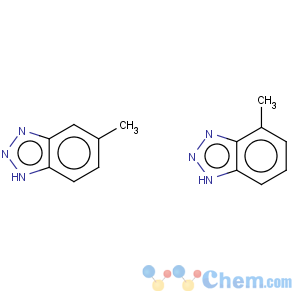 Molecular Structure
Detailed Description
Tolyltriazole is a versatile corrosion inhibitor that provides effective protection against oxidation and corrosion for various metals and alloys.CAS Number: 29385-43-1
UN NO.: 3077
EINECS NO.: 249-596-6
Molecular Formula: C9H9N3
Purity (%): 99.5% min
Appearance: White to off-white powder or granules
Packing: 25kg/bag or as per customer requirements
Tolyltriazole Uses
Corrosion Inhibition: This substance finds extensive use as a corrosion inhibitor in cooling water systems, metalworking fluids, and various industrial applications. It establishes a protective layer on metal surfaces, counteracting corrosion and prolonging equipment life.
Scale Inhibition: It effectively prevents the creation of scale or deposits within water systems, boilers, and heat exchangers. Its function minimizes mineral deposit buildup, thus sustaining equipment efficiency.
Metal Protection: This compound serves as a protective agent, particularly for copper and its alloys. It hinders metal surface oxidation and prevents tarnishing, proving valuable in metal preservation, cleaning, and storage.
Antifreeze Additive: It is occasionally incorporated into antifreeze solutions to enhance their corrosion protection attributes. This safeguards cooling system metal components and prevents rust development.
Concrete Enhancement: In construction, it acts as an additive for concrete and cementitious materials. It functions as a corrosion inhibitor for reinforcing steel, shielding it from chloride ion-induced corrosion.
Fuel Modification: Sometimes utilized as a fuel additive, especially in aviation fuels. It furnishes corrosion protection for fuel system components and helps avert deposit formation in fuel lines and injectors.